# Preprint publication & request for review — « Open Source 2.0 : From Open Source Software to Open Source Resources? »
**URL:** https://connect.oeglobal.org/t/preprint-publication-request-for-review-open-source-2-0-from-open-source-software-to-open-source-resources/9001
**Category:** Sharing Zone
**Tags:** building-capacity, open-source-software, oer
**Created:** [May 18, 2026, 7:14am UTC](https://connect.oeglobal.org/t/preprint-publication-request-for-review-open-source-2-0-from-open-source-software-to-open-source-resources/9001 "2026-05-18T07:14:22Z")
**Posts on this page:** 14
**Page:** 1
### Author:  [@Simon](https://connect.oeglobal.org/u/Simon)
#### Post date: [May 18, 2026, 7:14am UTC](https://connect.oeglobal.org/t/preprint-publication-request-for-review-open-source-2-0-from-open-source-software-to-open-source-resources/9001/1 "2026-05-18T07:14:22Z")
Hello world,
After years of trying to understand « open source », I think I start to get something. A sharing of the new preprint/citizen research article « Open Source 2.0 : From Open Source Software to Open Source Resources? » I’ve just published: [Open Source 2.0 : From Open Source Software to Open Source Resources?](https://doi.org/10.5281/zenodo.20237079)
I develop the idea of « open source resources », these resources where source files are provided (ex: docx/pptx/markdown/latex/… files of a PDF, h5p of an html, etc.). It’s a paradigm shift in the very meaning of open source that has direct implications for other openness movements, a way to foster collaboration.
Open source should not be considered as a software topic, and other openness movements should take ownership over this notion. By extension to OER, the notion of « [open source educational resources](https://arxiv.org/abs/2107.14330) » was also developed elsewhere.
In an open science mindset, I’m also actively looking for some feedback and open peer review, if you want to share your point of view: [PREreviews of “Open Source 2.0 : From Open Source Software to Open Source Resources?” | PREreview](http://prereview.org/preprints/doi-10.5281-zenodo.20237079)
I hope this conceptual revolution will reach you well, and it would be a pleasure to discuss more around the potential impact for open education.
Simon
---
### Author:  [@grip54](https://connect.oeglobal.org/u/grip54)
#### Post date: [May 18, 2026, 12:41pm UTC](https://connect.oeglobal.org/t/preprint-publication-request-for-review-open-source-2-0-from-open-source-software-to-open-source-resources/9001/2 "2026-05-18T12:41:18Z")
Hi Simon et al,
Thanks for the idea of OS Resources and for the opportunity to read your preprint. Peer reviw will follow
Anyway, any analysis of usage and impact of the Slideshare collection of PPTs, for learning and teaching?
All the best
Gilbert
---
### Author:  [@axel.klinger](https://connect.oeglobal.org/u/axel.klinger)
#### Post date: [May 18, 2026, 1:17pm UTC](https://connect.oeglobal.org/t/preprint-publication-request-for-review-open-source-2-0-from-open-source-software-to-open-source-resources/9001/3 "2026-05-18T13:17:23Z")
Hi Simon,
Thank you very much for sharing your idea and the preprint. I had the same idea for my presentation at OE Global 2023, titled “[Open Collaboration in Educational Resources - What We Can Learn from Open Source Development](https://oeglobal2023.sched.com/event/1S7n2/open-collaboration-in-educational-resources-what-we-can-learn-from-open-source-development).”
- Tutorials on [OER with GitHub](https://oersi.org/resources/?search=%22oer+tutorial+github%22&language=%5B%22en%22%5D) - and how to make them findable on OERSI
- Examples of [OER on GitHub and GitLab](https://oersi.org/resources/?provider=%5B%22GitHub%22%2C%22GitLab%22%5D)
Best,
Axel
---
### Author:  [@Simon](https://connect.oeglobal.org/u/Simon)
#### Post date: [May 18, 2026, 2:29pm UTC](https://connect.oeglobal.org/t/preprint-publication-request-for-review-open-source-2-0-from-open-source-software-to-open-source-resources/9001/4 "2026-05-18T14:29:49Z")
@grip54 This notion of « open source resources » is really key, may it inspire you !
Clairement pas d’analyse de Slideshare en particulier, je ne suis pas assez familier de la plateforme [clearly no analysis of SlideShare in particular, I’m not familiar with the platform].
I’m challenging this notion of « open source », let’s see where it can lead afterwards. It would be interesting to see to what extent source files are available, and what could be the potential impact !
Curious to read any (open) peer review, please take into account it’s my first “research paper” and that I don’t have any academic background 🙃 And it’s definitely a political paper to some extent, the definition of open source being political, it embeds some criticism in how science is produced. Given this situation, be firm but fair to improve it at the level it may reach! This is a big topic in the end.
@axel.klinger « and often the lack of access to the original source materials », it seems that, in different ways, we’re definitely pointing to the same problem. Thinking about « open source resources », about « open source educational resources » instead of OER may be part of the answer. Since I come from the world of software development, that I produce my resources mainly through software forges (including this article), I can only support this idea.
But using github/gitlab and cie (codeberg!), it comes with some tradeoffs. In the discussion section I argue about the need to develop more appropriate platforms to handle source files, we need tools more accessible for teachers without IT background.
---
### Author:  [@cogdog](https://connect.oeglobal.org/u/cogdog)
#### Post date: [May 18, 2026, 7:10pm UTC](https://connect.oeglobal.org/t/preprint-publication-request-for-review-open-source-2-0-from-open-source-software-to-open-source-resources/9001/5 "2026-05-18T19:10:19Z")
Thanks for sharing your paper @Simon and welcome to the OEG Connect community. I hope it draws in some more readers.
I was reminded of an impressive effort by Polimi Open Knowledge MOOC offering of an open course [OER102 “Enhancing Education Through Open Opportunities”](https://www.pok.polimi.it/course/view.php?id=158) which was created using only open source media software and all source materials were made available on open file formats. All the media, including planning documents, [are available via Zenodo](https://zenodo.org/records/14198499).
See this announcement by @Paola as well as [a video demo we hosted for Open Education Week 2025](https://www.youtube.com/watch?v=_sQYUjQMc3E)
> [@MOOC on Open Opportunities, with all materials available in editable format](https://connect.oeglobal.org/t/mooc-on-open-opportunities-with-all-materials-available-in-editable-format/7248):
>
> Happy new year, OE Global friends! A quick note to share one of our newest MOOCs on [Polimi Open Knowledge](https://www.pok.polimi.it/), CC BY: “[Enhancing education through open opportunities](https://www.pok.polimi.it/course/view.php?id=158)”. [[Graphic image of an open tire swing, as a metaphor for open education]](https://www.pok.polimi.it/course/view.php?id=158) The MOOC aims to help practitioners, instructional designers, teachers and librarians build on their existing knowledge and skills, thanks to reusable opportunities from open education examples in different fields and at different levels. It aims to inspire the…
It just seemed relevant and was maybe one of the only courses I have come across that was created with such a level of openness.
---
### Author:  [@Simon](https://connect.oeglobal.org/u/Simon)
#### Post date: [May 19, 2026, 5:54am UTC](https://connect.oeglobal.org/t/preprint-publication-request-for-review-open-source-2-0-from-open-source-software-to-open-source-resources/9001/6 "2026-05-19T05:54:27Z")
Thanks everyone to provide more evidences around source files in open education, it helps to support this idea of « open source » beyond software 🙃 It may be time to support « **open source educational resources** » instead of OER !
The @Paola course is a nice example, quite a lot of resources with certainly a specific work to achieve it as platforms are not adapted for it. Interesting point, I also do not find easily a link from their platform to Zenodo limiting in depth findability and therefore modification/adaptions (still unFAIR).
This shift towards open source resources is definitely not easy, requiring particular skills.
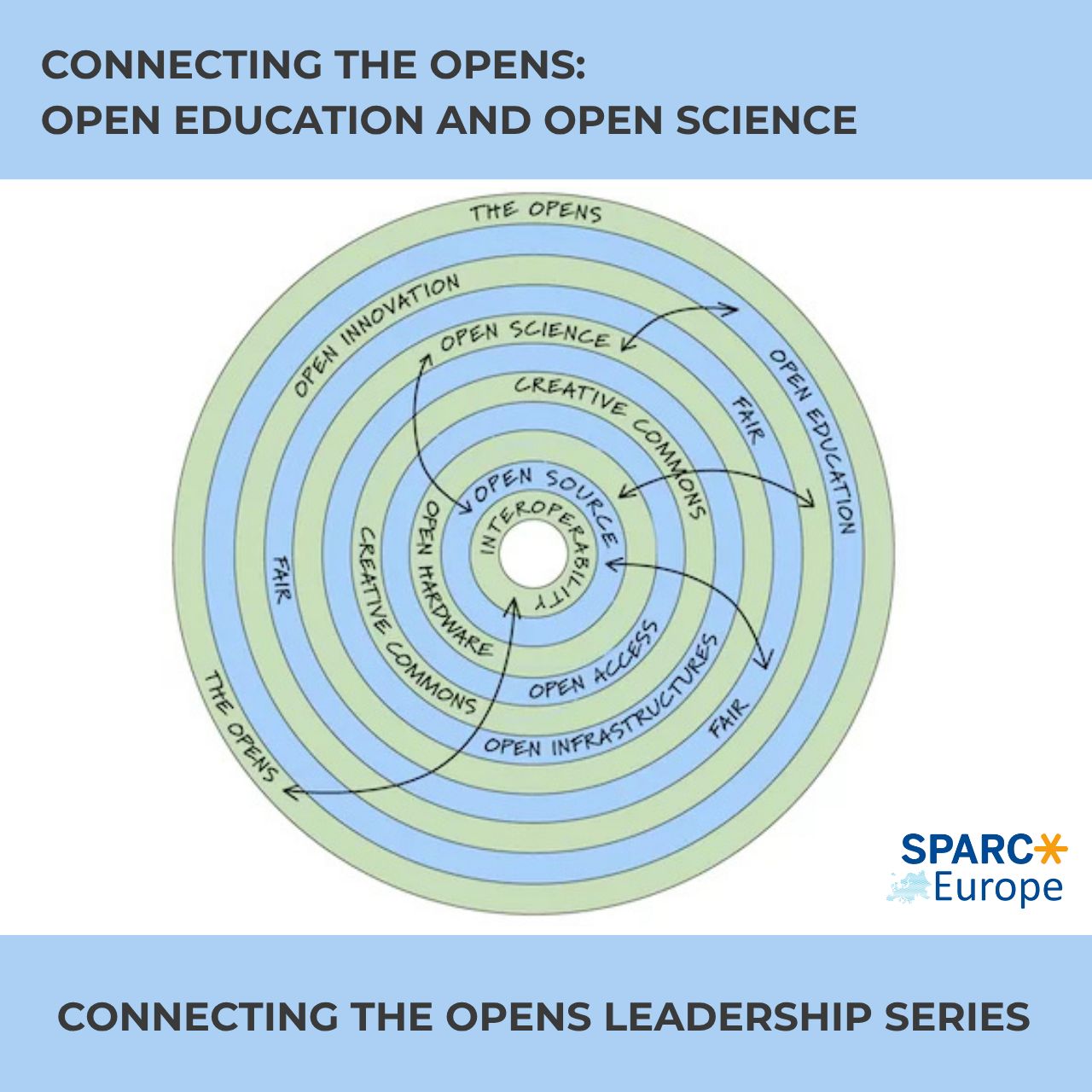
I would say this wheel may lack clarity around « open source » 😉
@Paola Regarding your work on connecting the open at SPARC, this potential conceptual revolution regarding the meaning of open source may be a way of linking some dots. Open source may become a shared principle/concept across openness movements, drawing a lot of attention to the design of infrastructures for the management of open resources. It could be a semantic evolution for many openness movements, open source resources being one step beyond open access or OER. To be fair, it could also bring some chaos in “open source [software] communities“ but it will draw attention from IT people to these other openness movements. It could contribute to raise awareness about each other movements.
Hope this idea of “open source 2.0“ can give you some food for thought to try to federate these openness movements/practices !
---
### Author:  [@Paola](https://connect.oeglobal.org/u/Paola)
#### Post date: [May 19, 2026, 7:01am UTC](https://connect.oeglobal.org/t/preprint-publication-request-for-review-open-source-2-0-from-open-source-software-to-open-source-resources/9001/7 "2026-05-19T07:01:59Z")
Definitely food for thought @Simon. I have not read your work yet, but thanks for sharing it in the first place.
In our work on Connecting the Opens at SPARC Europe, we are listening to the voices of the rectors, vice-rectors/chancellors, and other senior leaders we interviewed, and we are continuing to discuss with stakeholders involved at different levels. Many see the opens as connected through the lens of their work, and from their perspective. The wheel of “the Opens”, created by Robert van der Vooren (CC BY) during our work, does not prioritise any of the opens over the others; it represents the dialogue among them. I see open source as key in all this.
About the radically open MOOC experiment at Polimi: the process we implemented is completely different from the one we currently have, which has been in place for years and continually improved. The MOOC team identified, through this experience, some steps and choices that helped us improve the standard process, but this is very different from the “revolution” required to shift to that approach completely (and, as you point out, make it even better). Given my role, I wanted to explore whether and how it would be feasible, so I asked for this opportunity, and my colleagues joined me. Result: it is doable. Open source had a big part in it. I had to learn a lot beyond the software I am officially invited to use at my institution. I am lucky because I can do it: install the software on my institutional computer, use it, and release the results we co-created. Nothing in this last sentence is the default. Did we change the culture? Not yet. But we tried to take another step.
I second your last sentence: we need tools that are more accessible for teachers without an IT background. Or, when sustainable, we need staff around them to fill in this gap, and teams organised to create digital educational materials instead of asking the teachers to do it all by themselves. In my MOOC experience, I could count on two people to support the work we did together in video-making and graphic design. The same would be needed on the open source side of the work. We did everything by ourselves, and it definitely took us a lot of additional time at the beginning. I will certainly continue using some of them, while in some other cases, if the team is using different software, I need to comply and keep the work sustainable for all of us. If we all shifted to open source, of course, it would be different. We are not there yet, let’s continue the dialogue.
---
### Author:  [@italovignoli](https://connect.oeglobal.org/u/italovignoli)
#### Post date: [May 19, 2026, 9:23am UTC](https://connect.oeglobal.org/t/preprint-publication-request-for-review-open-source-2-0-from-open-source-software-to-open-source-resources/9001/8 "2026-05-19T09:23:37Z")
Hi Paola (and others),
I have just had a quick look at Simon’s document, but I still have to
read it with the due attention. While I totally agree with the concept
of Open Source Resources, I think it should be clear that not all open
source resources are equal, as their openness is strictly related to the
use of true open standards (especially for documents). Unfortunately,
here ISO does not help, as they have approved two closed and proprietary
standards as open, namely OOXML or the format of Microsoft Office
documents, and PDF or the format of Adobe Acrobat from version 2.0
(which is proprietary disguised as open, while until version 1.7 was
open, although property of Adobe).
I have recently written a blog post to explain why, in the digital
world, documents - in reality - are pieces of software:
[Why a digital document is a piece of software, and what that means for your freedom - TDF Community Blog](https://blog.documentfoundation.org/blog/2026/05/13/digital-document-a-piece-of-software/).
I am happy to dig deeper into this topic as I think that the connection
between open standards for documents and software is missing for most
people, and many people use proprietary document formats - leaving full
control of their documents to the company that controls their format
- without being aware of it.
As you know, I am not a technologist - I have a degree in humanities,
for Italians Laurea in Lettere Moderne - and I am not a young geek
either (I am close to 72). I have spent the last 20 years of my personal
and working life in open source software, trying hard to explain it to
non technical people. I live close to Milan, and I would be more than
happy to help you understand more about open source software for your
projects by meeting in person.
Best regards, Italo
---
### Author:  [@Simon](https://connect.oeglobal.org/u/Simon)
#### Post date: [May 19, 2026, 10:48am UTC](https://connect.oeglobal.org/t/preprint-publication-request-for-review-open-source-2-0-from-open-source-software-to-open-source-resources/9001/9 "2026-05-19T10:48:49Z")
**In discussion section, infrastructure & formats paragraph** 😎
> The choice of source file format must also be taken into account as it is possible to create open source resources using closed formats. For example, an image using a `.psd` source file requires Adobe Photoshop to be edited meaningfully. An orientation towards open formats and open standards will help to support independence and interoperability.
So definitely in line with you @italovignoli. I would qualify as « open source resources » a resource where source files are provided using a proprietary format, as it enable you modification with the appropriate tools, but some rooms for improvements to be “fully open“. Form some domains things can be mostly on proprietary formats/tools, so may be hard to achieve.
It’s one more technical layer to add to the complexity ! It makes the openness of resources really multidimensional, inside this spectrum/degree of openness.
It would be definitely an issue to think the infrastructure of tomorrow to handle source files based on proprietary formats…
---
### Author:  [@Paola](https://connect.oeglobal.org/u/Paola)
#### Post date: [May 19, 2026, 1:03pm UTC](https://connect.oeglobal.org/t/preprint-publication-request-for-review-open-source-2-0-from-open-source-software-to-open-source-resources/9001/10 "2026-05-19T13:03:14Z")
Happy to meet and continue the discussion, @italovignoli . There are so many steps ahead, but let’s start taking one!
---
### Author:  [@italovignoli](https://connect.oeglobal.org/u/italovignoli)
#### Post date: [May 21, 2026, 12:59pm UTC](https://connect.oeglobal.org/t/preprint-publication-request-for-review-open-source-2-0-from-open-source-software-to-open-source-resources/9001/11 "2026-05-21T12:59:59Z")
Hi Simon,
Yes, document formats can be a nightmare, as there are standards - or
standard equivalent formats - but all proprietary software vendors
default to their format as a way to lock in users. Photoshop is just an
example, although peculiar because all the standard equivalent formats
for images (TIFF, JPEG and PNG) are not up to the task when you work on
high resolution images. Even GIMP, which is fully open source, defaults
to his own proprietary format.
The situation is different when you have true open standards, and
vendors try to tweak them or develop proprietary formats disguised as
standards, as in the case of Microsoft Office document formats and Adobe
PDF 2.0+. The latter is the best example of the evil behavior of the
vendor, as PDF up to 1.7 was open although property of Adobe (I have had
the luck of working for a decade with John Warnock, the inventor of
Postscript and PDF, and I know the PDF story since the beginning, when
it was code named Project Camelot), while PDF 2.0+ has been recognized
by ISO as an open standard while is proprietary (and can be managed
properly only by Adobe products).
The main issue, in my opinion, is that the education about document
formats has been left in the hands of vendors, and as a result what
users have been told reflects the commercial interests of the vendors.
Today, in the digital world, the education about software and document
formats - not the technical education, just the basic principles -
should be managed by schools, starting from the early stage (we have
tested the concept with a primary school in Italy, where 7 years old
students got the concept in less than 2 hours, while some of their
parents did not manage to get it after 6 hours of lessons).
Best regards, Italo
---
### Author:  [@Simon](https://connect.oeglobal.org/u/Simon)
#### Post date: [May 22, 2026, 5:13am UTC](https://connect.oeglobal.org/t/preprint-publication-request-for-review-open-source-2-0-from-open-source-software-to-open-source-resources/9001/12 "2026-05-22T05:13:17Z")
The big topic of standardization 🙂 We definitely don’t speak enough about these challenges were huge work have to be made. It probably needs a philosophical revolution to avoid this orientation to proprietary format, and as we rely a bit too much on the market to shape the world…
You probably heard about it but for those who eventually don’t, recently the government in Germany made a step to mandate Open Document Format (ODF): [BIG NEWS: Germany has just made the standard Open Document Format (ODF) mandatory - TDF Community Blog](https://blog.documentfoundation.org/blog/2026/03/20/big-news-germany-has-just-made-odf-mandatory/)
Sadly in French with no subtitle, but regarding this story of PDF an IT YouTuber made a video about it: [https://www.youtube.com/watch?v=Xxg\_8mge50U](https://www.youtube.com/watch?v=Xxg_8mge50U)
It was my way to learn more this PDF history! As it’s old and answer to problem that we may consider differently today (pre World Wide Web!), I’m really wondering if we will be able to move beyond PDF one day in many domains. I’m thinking about research articles for example, to be able to have more “living documents“. I think this PDF practice in the field is quite primitive (and certainly undermine explorability of scientific knowledge). Without speaking of textbook as we are in an open education forum !
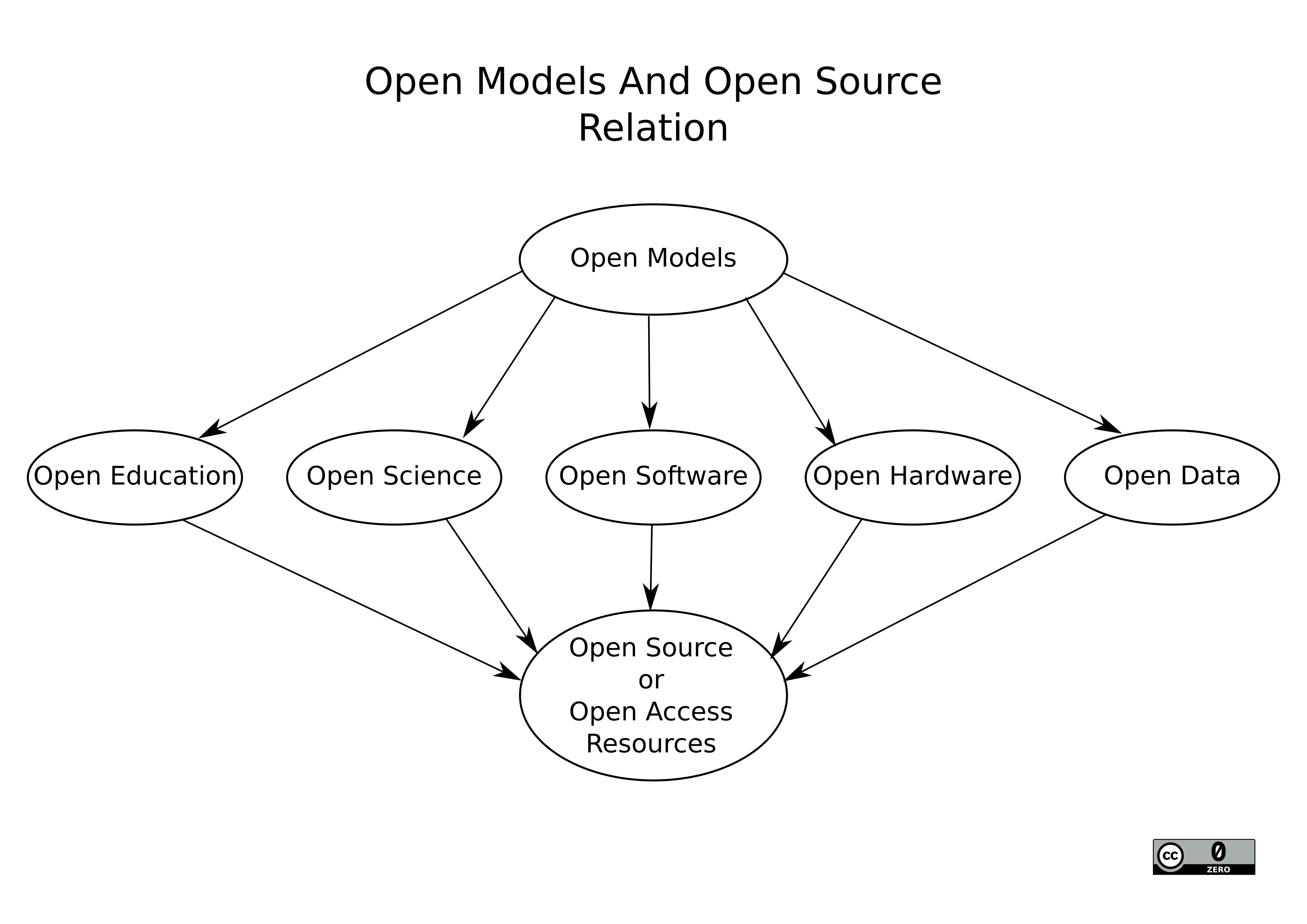
Agree again with this need of education, and that it may start for primary level. Trying to work around general culture on [open models](https://open-models.org/) (open science, open education, open software, open standard, open data…), I think some basis can/should be explained before university or whatever. Regarding France, I think it can be especially relevant with the national open education strategy, with this forge of educational digital commons. To let them understand the tool they use… Having them understand these trends regarding openness at a broader level to make them more willing to adopt open software/standard/anything open ?
---
### Author:  [@Simon](https://connect.oeglobal.org/u/Simon)
#### Post date: [May 24, 2026, 7:41am UTC](https://connect.oeglobal.org/t/preprint-publication-request-for-review-open-source-2-0-from-open-source-software-to-open-source-resources/9001/13 "2026-05-24T07:41:14Z")
I just added the notion of « open source educational resources » to Wikipedia on the OER page: [Open educational resources - Wikipedia](https://en.wikipedia.org/wiki/Open_educational_resources)
The question of source files was not even mentioned before… problem fixed.
While doing these edits, I found this interesting quote in UNESCO recommendations: « (d) developing mechanisms to support and incentivize all stakeholders to publish source files and accessible OER using standard open file formats in public repositories; »
_ **This problem of source files definitely need more attention, time to move a bit away from this focus on licensing?** _
I also reflected this use of open source beyond software on the Wikipedia page of open source: [Open source - Wikipedia](https://en.wikipedia.org/wiki/Open_source)
The page on open source is quite confusing, I try to challenge its software centric definition (kind of), the page telling also a lot about other kind of open source usage (electronics [hardware], food & beverage, medicine…). Almost wishing for an edit war 😅
---
### Author:  [@Simon](https://connect.oeglobal.org/u/Simon)
#### Post date: [July 1, 2026, 9:29am UTC](https://connect.oeglobal.org/t/preprint-publication-request-for-review-open-source-2-0-from-open-source-software-to-open-source-resources/9001/14 "2026-07-01T09:29:41Z")
Little update as I released the v0.2 of the paper these last days: [https://doi.org/10.5281/zenodo.20237079](https://doi.org/10.5281/zenodo.20237079)
Mostly strengthen the theoretical background of the document, deconstructing then the Open Source Definition of the Open Source Initiative from a technical, legal, sociological and linguistic perspective.
Added the concept of social construction of reality by Peter Berger and essentialy contested concept by Gallie. Add a section on copyright (reform) that may render licensing practice obsolete and the distinction between prescriptive and descriptive definition.
In the meantime in Wikipedia, I added the concept of [Open Source Educational Resources](https://en.wikipedia.org/wiki/Open_educational_resources#Open_Source_Educational_Resources) to the OER page and raised the debate around the software centrism of the [open source](https://en.wikipedia.org/wiki/Open_source) page.
Another interesting point for OE maybe, the [LearningResource](https://schema.org/LearningResource) type was created for [schema.org](http://schema.org), I suggested in complementary to add [sourceFile property](https://github.com/schemaorg/schemaorg/issues/4851). It would provide both the information about the right to modify and ability to do so with the semantic web of OER.