Add Your Regionally Focused Knowledge Landmarks

As part of the OEGlobal 2025 Tour, we are looking to collect and share what we call “Knowledge Landmark” - more or less open resources such as publications, presentations, articles, projects that are focused on a specific region or part of the world.

landmark-share-header

Continuing with our travel theme, these might be those plaques and signs that you find in different parts of the world to mark a historic or significant location. Think of the blue plaques in the UK or roadside historical markers typical in North America (and likely elsewhere).

Please add one or many to our collection via the OEGlobal 2025 Tour Knowledge Landmarks form. The key feature is being something that focuses on open education in a region of the world.

We will publish all as an open resource as a followup action for the tour.

If you do add one, share in a reply below the Knowledge landmark you shared, as an preview of what we hope to collect. The web form will even provide you an easy summary to copy paste here.


OEGlobal Tour 2025 Navigation

:spiral_calendar: General Calendar plus links to daily events

:arrow_up_small: Main Space virtual lobby for the Tour
:arrow_forward: Welcome Greeting and Meeting
:arrow_forward: Tour Information How to Participate, What to See and Do

:arrow_forward: Day 1 Middle East, Asia, & Oceania
:arrow_forward: Day 2 Africa and Europe
:arrow_forward: Day 3 Latin America and North America
:arrow_forward: OE Award Winners Ceremony

1 Like

Just to test the web form, I added a Landmark shared with me by @yamazato featuring a presentation by Dr. Haruo Takemura, one of our panelists for the Day 1 session.

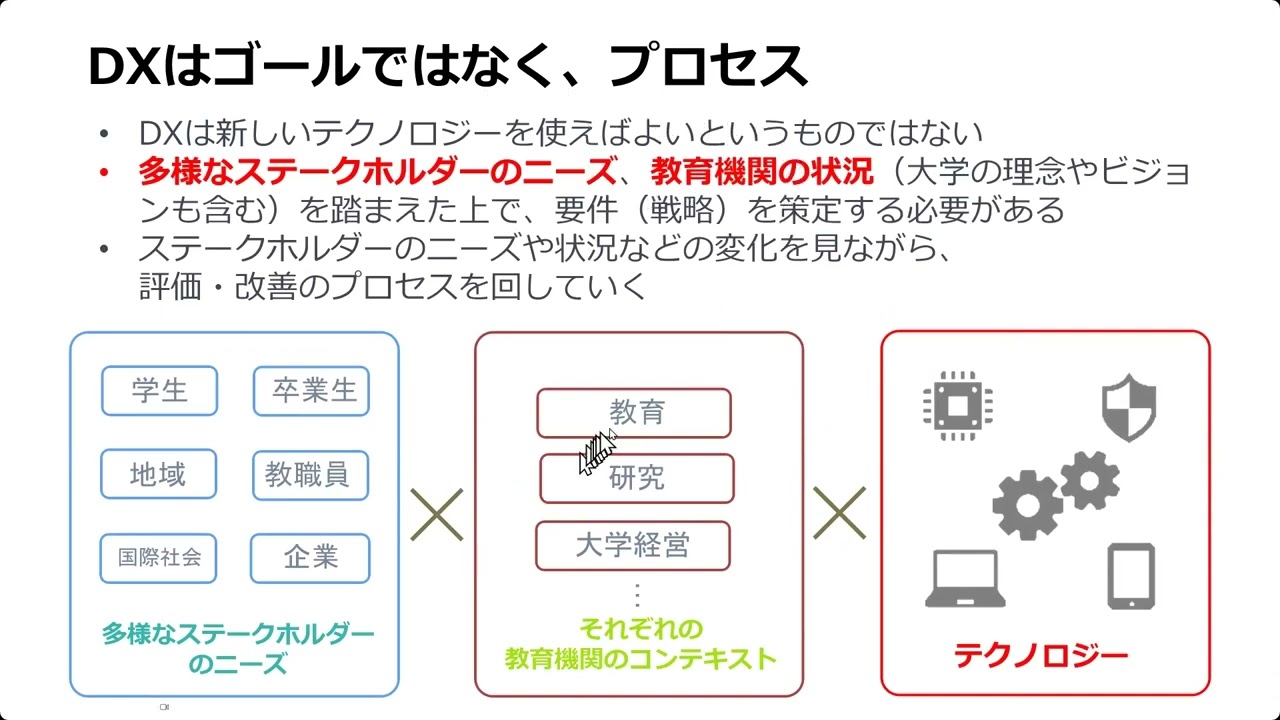
I shared the Knowledge Landmark What is needed to realize digital transformation in education? a presentation published by Haruo Takemura. This landmark represents open education in Oceania (specifically Japan):

This is a presentation for the Cyber ​​Symposium on Online Education and Digital Transformation in Universities by Haruo Takemura, President of the Graduate School of Educational Technology and the Professor Emeritus at Osaka University. Dr. Takemura shares his career perspective on education as the starting point to talk about the idea and potential for digital transformation especially in Japan. This is the goal of Japan’s Education DX Roadmap "Education DX Roadmap" was formulated|Digital Agency

Note that this video is an automated English translation of the talk. Thank you to Takaya Yamazato for sharing this video.

Here is the video!

Three European landmarks just added! :smiling_face_with_sunglasses:

Thanks Jan… but only I know that because I have access to the form, let the others here know what you added?

OK @cogdog, here we go! :slightly_smiling_face:

Day 1 kicking off in 10 minutes, woo hoo! :partying_face:

1 Like

More landmarks have been coming in! i added to the web form a counter to show what has been shared so far (15).

One of then just came from me, a blog post by Elizabeth Thai who makes a case why/how attitudes and conversations about AI are different in Asia than North America.

She suggests its more of a practical attitude,

In Asia, we are less consumed by ethical, morality and monetary reasons; the conversations in Asia are more grounded in practicality.

In addition she notes how there is more effort in Asian countries to develop their own LLMs to avoid the bias of the Western mega platforms but also to offer better systems based on non-English languages

I also notice that conversations in English-speaking social media is often focused on closed AI models like ChatGPT, Gemini etc. In the East Open source AI is a thing and there are small, quiet movements by countries to create their own AI models. I realise how important this is because most close AI models are trained on the English internet; their values, emphasis, and context are mostly Western, which may not suit Asian societies.

That video link led me to discover the projet from Singapore to develop their own LLM MERaLiON

Thai also links to a post by Natalia Cote-Munoz-- The Great AI Divide: Why China Embraces What the West Fears – “As the West Experiences AI Techlash, China Remains Techno-Optimistic as Ever”

I wonder from our colleagues in Asia if this matches your perception? It feels like a much different mindset about AI than here in the West.

We are happy to see a few more landmarks submitted. Please note we are looking for items that demonstrate a focus on open education in a specific geographic region of the world.

I just added this brand new report from JISC on Global education and technology: insights into transnational student and staff digital experiences:

This research is on the experience of students from all regions of the world on their digital education at UK higher education institutions- while not specific to open education, the results and summary certainly are of interest in our space. As a sample of the geographic representation in the study, the maJority are students from Asia.

This second report complements it by focusing on the user experience, drawing on direct feedback from TNE students and staff to better understand these digital challenges. In partnership with 19 UK HE providers, the student and staff voice was heard from 51 different instances of TNE provision, globally. This research strengthens our commitment to support UK TNE delivery, working in collaboration with Universities UK International (UUKi), the Quality Assurance Agency (QAA) and the British Council.

The report also discusses:

  • Differences in connectivity and access by country and global region
  • How digital is used to support teaching and learning in different learning course contexts (with comparisons between three primary modes of learning: synchronous in place, synchronous online and asynchronous)
  • Digital challenges as identified by fly-in, remote and host country staff, and what additional support and training is required
  • Feedback in relation to themes such as internationalising and localising curricula, assessment, and use of GenAI

I shared the Knowledge Landmark Drones and AAM Across the World, an Open Education Resource published by Sarah Nilsson, PhD, JD.

Global drone, UAV, UAS, UAM, AAM, laws for all the world’s countries. Federal, national, state and local laws, regulations, and policy.

This landmark represents open education in every country of the world: United States, Canada, Antigua and Barbuda, Antarctica, Argentina, Bahamas, Barbados, Belize, Bolivia, Brazil, Chile, Colombia, Costa Rica, Cuba, Dominica, Dominican Republic, Ecuador, El Salvador, Grenada, Guatemala, Guyana, Haiti, Honduras, Jamaica, Mexico, Nicaragua, Panama, Paraguay, Peru, Saint Kitts and Nevis, Saint Lucia, St. Vincent and Grenadines, Suriname, Trinidad and Tobago, Uruguay, Venezuela, Australia, Fiji, Kiribati, Marshall Islands, Micronesia, Nauru, New Zealand, Cook Islands, Niue, Tokelau, Palau, Papua New Guinea, Samoa, Solomon Islands, Tonga, Tuvalu, Vanuatu, Albania, Andorra, Austria, Belarus, Belgium, Bosnia and Herzegovina, Bulgaria, Croatia, Czechia, Denmark, Faroe Islands, Greenland, Estonia, Finland, France, French Guiana, French Polynesia, Guadeloupe, Martinique, Mayotte, New Caledonia, Reunion, Saint Barthelemy, Saint Pierre & Miquelon, Wallis and Futuna, Germany, Greece, Holy See Vatican, Hungary, Iceland, Ireland, Italy, Kosovo, Latvia, Liechtenstein, Lithuania, Luxembourg, Malta, Moldova, Monaco, Montenegro, Netherlands, Aruba, Caribbean Netherlands, Curacao, Sint Maarten, North Macedonia, Norway, Poland, Portugal, Romania, Russian Federation, San Marino, Serbia, Slovakia, Slovenia, Spain, Sweden, Switzerland, Ukraine, United Kingdom, Anguilla, Bermuda, British Virgin Islands, Cayman Islands, Channel Islands, Falkland Islands (Malvines), Gibraltar, Isle of Man, Montserrat, Saint Helena, Turks and Caicos, Afghanistan, Armenia, Azerbaijan, Bahrain, Bangladesh, Bhutan, Brunei, Cambodia, China, Hong Kong, Macau, Taiwan, Cyprus, Georgia, India, Indonesia, Iran, Iraq, Israel, Japan, Jordan, Kazakhstan, Kuwait, Kyrgyzstan, Laos, Lebanon, Malaysia, Maldives, Mongolia, Myanmar, Nepal, North Korea, Oman, Pakistan, Philippines, Qatar, Saudi Arabia, Singapore, South Korea, Sri Lanka, State of Palestine, Syria, Tajikistan, Thailand, Timor-Leste, Turkey, Turkmenistan, United Arab Emirates, Uzbekistan, Vietnam, Yemen, Algeria, Angola, Benin, Botswana, Burkina Faso, Burundi, Cabo Verde, Cameroon, Central African Republic, Chad, Comoros, Congo, Cote D’Ivoire, Democratic Republic of the Congo, Djibouti, Egypt, Equatorial Guinea, Eritrea, Eswatini, Ethiopia, Gabon, Gambia, Ghana, Guinea, Guinea-Bissau, Kenya, Lesotho, Liberia, Libya, Madagascar, Malawi, Mali, Mauritania, Mauritius, Morocco, Mozambique, Namibia, Niger, Nigeria, Rwanda, Sao Tome & Principe, Senegal, Seychelles, Sierra Leone, Somalia, South Africa, South Sudan, Sudan, Tanzania, Togo, Tunisia, Uganda, Zambia, Zimbabwe, Western Sahara.

1 Like

That list covers it all, Heather. It made me realize our landmark form needed an option for “All Regions”, which is now there (and I edited your entry to reflect this)

The tour has ended but we are very eager to collect more “Knowledge Landmarks”, e.g. papers, projects, research that focus on Open Education in a Region.

I just came one, which while from 2020, is very relevant

I shared the Knowledge Landmark Current state of open educational resources in the Arab region: an investigation in 22 countries a Published Journal Article, Book, Chapter published in the Smart Learning Environments journal.

This landmark represents open education in Middle East (specifically Algeria, Bahrain, Comoros, Djibouti, Egypt, Iraq, Jordan, Kuwait, Lebanon, Libya, Mauritania, Morocco, Oman, Palestine, Qatar, Saudi Arabia, Somalia, Sudan, Syria, Tunisia, United Arab Emirates, Yemen):

While several studies were conducted to investigate the current state of Open Educational Resources (OER) in several regions (e.g., Europe, America, Middle East and MENA), to the best of our knowledge, no study was conducted to cover the entire Arab region, specifically the twenty-two Arab countries. Therefore, to identify the OER gap in this region and then provide recommendations to facilitate OER adoption, this study investigates the current state of OER in the Arab region, specifically in twenty-two Arab countries. The obtained results showed that the OER progress is unbalanced within the Arab countries. Interestingly, several Arab countries are still lack behind when it comes to the application of OER in universities and schools. Finally, several recommendations are identified to several stakeholders, including policy makers and educators, to achieve social justice and facilitate the adoption and use of OER in the Arab region.