Hang on, there’s more to this story, thanks to a reference from @Downes in hos OLDaily post today from Paul Bacsich’s matic media site:
This includes a very long report/analysis created via a process of intensive conversation with ChatGPT and a reprocessing via another LLM called Manus, then human edited into the PDF version. Reflections on the closure of the OER Foundation and the implications for OER policies: A conversation with ChatGPT
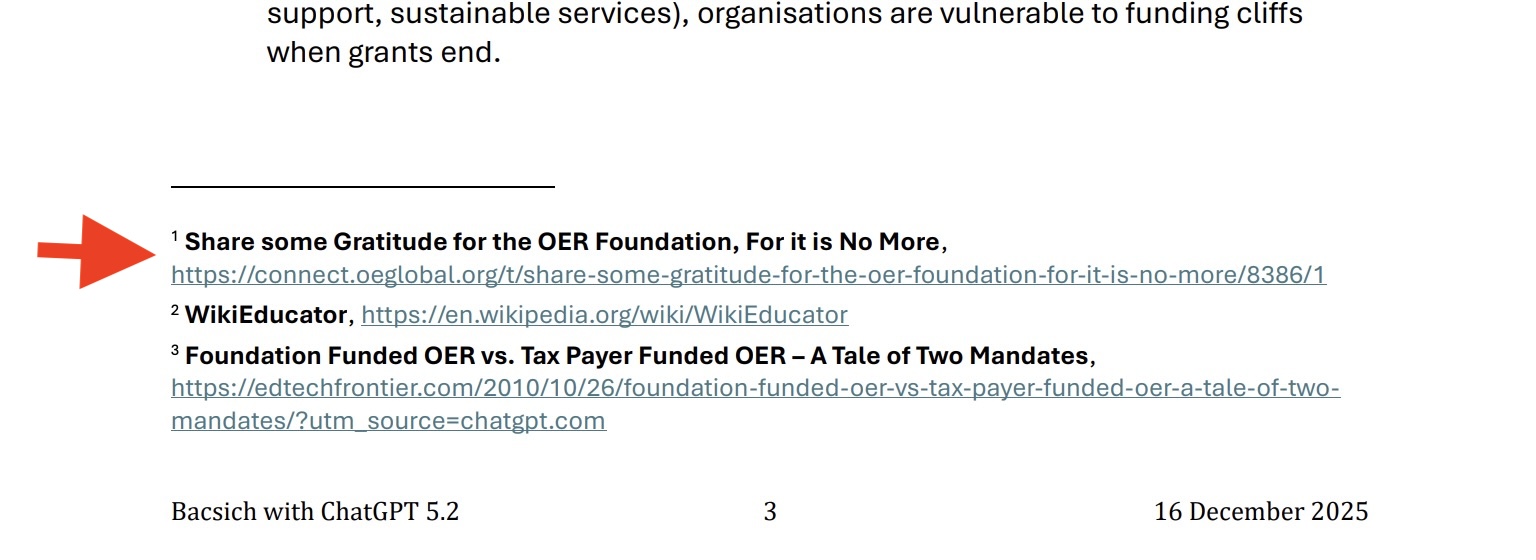
We have a small bit of pride, as this OEG Connect post is the first footnote!
So it will take good amount of time to read, and it does not only summarize what the authors suggest as the regional factors leading to the end of the OERu but also many other broader questions about OER, the implications of micro-credentials a limiting factor, the success of OER efforts in British Columbia, Ontario, and Germany.
Now it feels a bit more than a glib chat like summary, there are some strong statements in the closing:
OER fails when it is treated as an educational movement; it survives when treated
as public infrastructure.
and regarding the impact of AI on OER, take this in:
AI collapses discovery, synthesis, and explanation into one interaction
The Commons is no longer directly visited; it is intermediated
I am again just skimming after finding, I am keen to hear from others who take the time to read what the authors describe
Although it seems a distractor from our work on reconstructing assignments in an AI-heavy world, the report is at 8,000 words, about the length of a shortish undergraduate dissertation, and its complex structure in Word, with footnotes and endnotes, makes it ideal as a testbed for programmatic creation and editing via LLMs and thus part of our tring agenda too. More on that soon, ready for the next semester.
and see also Stephen’s summary and yes, opinion https://www.downes.ca/post/78619