And what’s better than ending this series with an article on “[in]gratitude”. Should we expect gratitude to continue sharing our work?
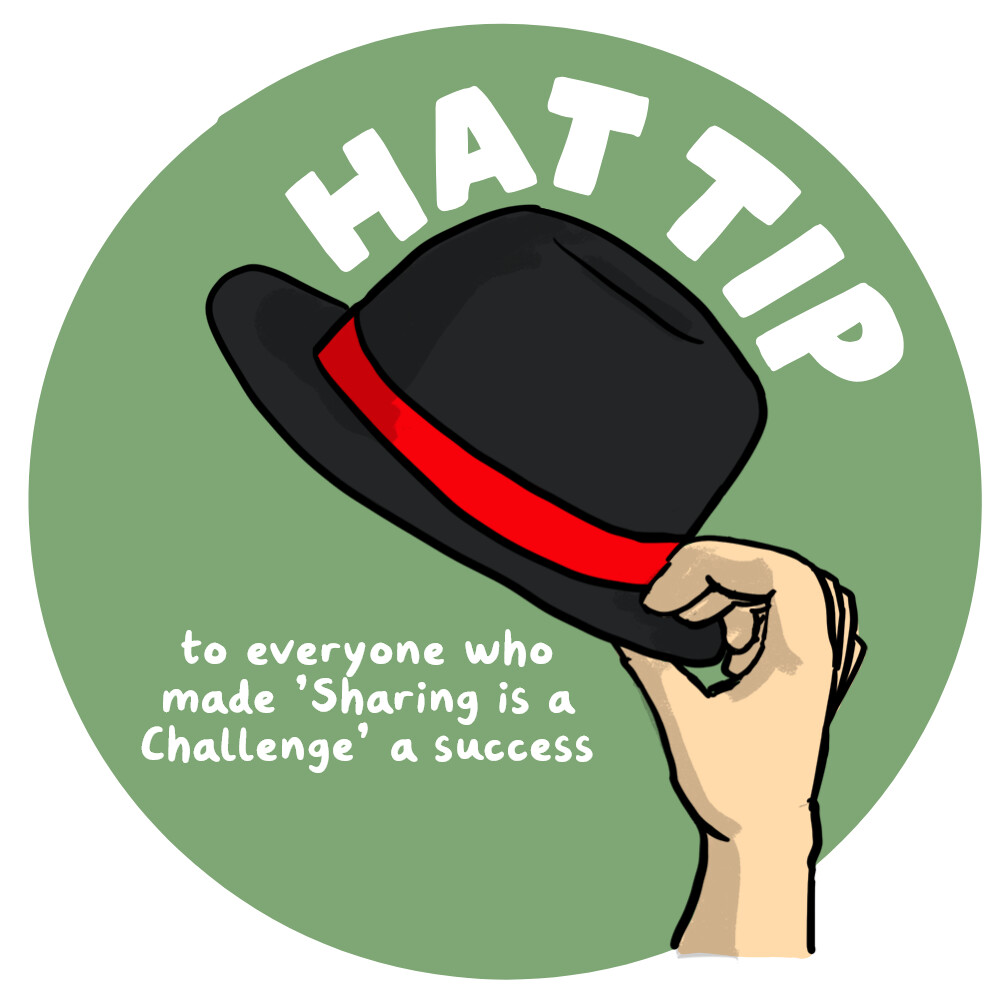
Drawing on his passion for photography and his professional experience at OE Global, Alan Levine (@cogdog) advocates for more gratitude with simple actions such as “Always Be Attributing” or the “Hat Tip Remixer”, while reminding us that the value of sharing often lies in unexpected rewards.
And for those, like me, who don’t know much about flowers, you may even learn how to recognise a “ranunculus”!
Potential Serendipity over Expectations of Gratitude by Alan Levine
Alan Levine is one of the most active advocates in the open world. Every day, he manages to share online a website, an initiative or an idea that advances the open movement somewhere in the world. In this article, he draws on his own experiences to explain why it is not wise to organise gratitude, but rather to rely on its serendipity.
Thank you very much @cogdog for this very nice piece!
And I take this opportunity to thank everyone who helped make this series a success: authors, reviewers, readers, and those who shared and/or comment the articles!
Hat tip by @visualthinkery is licensed under CC BY-SA. Remix by Erwan Louërat
We started with the introduction on Monday 2nd, and we are just one day away from having published every day in March (except Friday and the weekend, as planned from the start). It would be a shame not to make it… So, see you tomorrow for our very last article!
Thank you, @erwan_louerat, for guiding and holding this space so thoughtfully throughout the series, and @cogdog for sharing the last challenge in the series in such a meaningful way.
Alan, this piece really resonated. The idea of shifting from expecting gratitude to being open to serendipity feels both grounding and liberating. It speaks to something many of us experience which is the uncertainty that can accompany giving and sharing openly and wondering how, or if, it was received.
I especially appreciate the reminder that recognition doesn’t always come in visible or immediate ways, and that the value of sharing often unfolds over time, through unexpected connections and uses we may never fully see.
It also connects back to earlier conversations in the series about legitimacy, judgment, and belonging. If sharing becomes too closely tied to external validation, it can feel fragile. But when it is rooted in contribution and openness to possibility, it becomes something more sustaining. This piece gently brings us back to something more human: relationships, generosity, and the unexpected ways in which sharing travels.
And in that sense, perhaps small practices like attribution, acknowledgment, and “hat tips” are not about organizing gratitude, but about nurturing a culture where it can emerge more naturally.
To others who might jump into the conversation:
What small practices of acknowledgment or appreciation have made a difference for you and how might we cultivate more of them in our community?
Thank you again for this reflection and for all the ways you model this in practice.