Please share!
The Open Education Group thanks to generous support from the Hewlett Foundation is seeking to support early career researchers to conduct studies in open education (what is open education, click here) through the open education research fellowship.
The purpose is to support education professionals to develop their open education scholarship ideas into published works. Specifically, this fellowship seeks to provide mentorship, community, and some financial support to carry out their ideas in open education research. Financial support includes attendance at the Open Education Conference in fall of 2027. The fellowship will also pay for article processing charges to allow for publications developed in this fellowship to be publicly available (around $3,000). In addition, fellows will receive a stipend of $1200 for submitting a manuscript based on the fellowship work (submission deadline is to January 15, 2028).
Applications will be assessed based on its potential contribution to open education, feasibility, and novelty. The Open Education Group fully recognizes the need to consider issues of diversity, equity, inclusion, and access in education research. Because of this, applicants will be asked to explain how their proposed research project would be relevant to diversity, inclusion, equity, and access to education. Applicants should have some prior research training and will be asked to list their previous research coursework. Proposals relevant to artificial intelligence and open education, such as applications to open pedagogy or critical perspectives in the ethics of AI, will be prioritized.
For the purpose of this fellowship, the following groups are considered early career researchers: doctoral graduate student (e.g., PhD, EdD, PsyD, DSW, DNP, DBA), postdoctoral researchers, pre-tenure faculty, teaching-track/clinical faculty (including librarians), faculty at teaching-intensive institutions (liberal arts, community colleges, regional institutions, etc.), K-12 administrators and teachers, and public education employees. Full or part time status applicants are eligible. Tenured faculty at research institutions would generally not be considered early career researchers. Please feel free to contact Virginia Clinton-Lisell with questions about eligibility at virginia.clinton@und.edu. Note, we can only offer this fellowship to early career researchers in the United States or Canada. If you have a work visa for the United States, please check with your visa guidelines regarding payment eligibility from the fellowship prior to applying. While this fellowship is limited to US and Canadian residents, we strongly encourage research projects with global perspectives, particularly in the Global South.
Learning more about the fellowship in this video
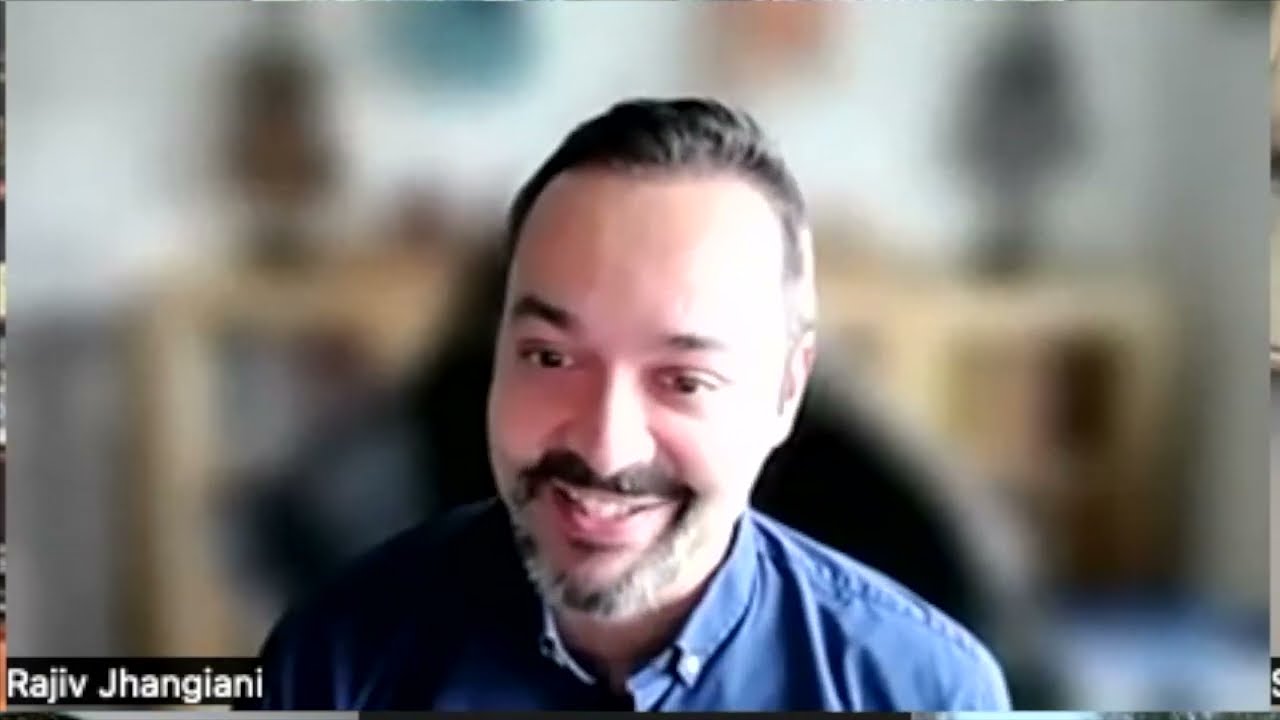
If you are interested, please complete the application on Qualtrics here (full link is https://und.qualtrics.com/jfe/form/SV_9FWKHLTgTZbu8dw).
A copy of the application may be viewed here to assist in preparation. Applications are due May 15th, 2026, at 11:59 pm Central Daylight Time.
Please contact Virginia Clinton-Lisell with any questions, virginia.clinton@und.edu
Examples of research projects previously supported for publication in the fellowship include the following (see a comprehensive list here):
Biddle, A. M., & Clinton-Lisell, V. (2023). “The pictures allowed me to connect to the material more”: Student perceptions of a diversity-focused open pedagogy assignment. Scholarship of Teaching and Learning in Psychology, 9(4), 405–418. https://doi.org/10.1037/stl0000385
Brandle, S. M. (2020). It’s (not) in the reading: American government textbooks’ limited representation of historically marginalized groups. PS: Political Science & Politics, 53(4), 734-740.
Bryant, T., & Thomas, C. (2024). Black, Indigenous, and Faculty of Color Awareness of Open Access. College & Research Libraries, 85(1), 7. https://doi.org/10.5860/crl.85.1.7
Gumb, L. & Cross, W. (2022). In Keeping with Academic Tradition: Copyright Ownership in Higher Education and Potential Implications for Open Education. Journal of Copyright Education and Librarianship
Jordan, J. (2023). Compounded labor: Developing OER as a marginalized creator. In the Library with the Lead
Lo, L.S., Jordan, J., & Surbaugh, H. (2023). The cost of success: Exploring the impact of textbook costs at a Hispanic-Serving R1 Institution. Open Praxis. https://openpraxis.org/articles/10.55982/openpraxis.15.2.554
Kelly, A.E., Laurin, J.N., Clinton-Lisell, V. (in-press). Making Psychology’s hidden figures visible using open educational resources: A replication and extension study. Teaching of Psychology.
Nusbaum, A. T., Cuttler, C., & Swindell, S. (2019). Open Educational Resources as a Tool for Educational Equity: Evidence from an Introductory Psychology Class. In Frontiers in Education (Vol. 4, p. 152). Frontiers.
Ozdemir, O., & Bonk, C. (2017). Turkish Teachers’ Awareness and Perceptions of Open Educational Resources. Journal of Learning for Development-JL4D, 4(3)
Smith, N. D., Grimaldi, P. J., & Basu Mallick, D. (2020). Impact of Zero Cost Books Adoptions on Student Success at a Large, Urban Community College. Frontiers in Education, 5. https://doi.org/10.3389/feduc.2020.579580
Pakkal, O., Twele, A., Gwozdz, L.,& Jhangiani, R. (2025). An Investigation into Student Perceptions of Social Justice Frames in a Course Syllabus, Open Praxis, 17(3), p. 429–444. https://doi.org/10.55982/openpraxis.17.3.831.
Tang, H., Lin, Y. J., & Qian, Y. (2020). Understanding K-12 teachers’ intention to adopt open educational resources: A mixed methods inquiry. British Journal of Educational Technology.
Tijerina, T.K. (2025). A case for Open Educational Resources in Technical and professional communication scholarship: Active equality applied. Journal of Technical Writing and Communication, 55(4), 447-467. https://doi.org/10.1177/00472816251326502
Wynants, S. A., & Dennis, J. M. (2022, March). Redesigning a research methods course with personalized, interactive OER: A case study of student perceptions and performance. Journal of the Scholarship of Teaching and Learning, 22(1).