Is the global OER movement doing enough to support knowledge creation in languages beyond English, or are we unintentionally reinforcing linguistic inequality?
2 Likes
I’m wondering what it is exactly you believe the global OER movement should be doing. For most of us, it means sharing our resources openly.
1 Like
Thanks Stephen. I agree that the foundation of the OER movement is sharing resources openly. My question is whether openness alone is sufficient when most knowledge production continues to be in English.
I also think the movement could encourage and recognize multilingual knowledge creation through initiatives like translation grants, community partnerships, multilingual repositories, recognition for contributors creating OER in underrepresented languages, and research on the barriers these communities face. Otherwise, we run the risk of having openness that is technically global, but practically unavailable to millions of learners and educators.
I’d be interested to hear your thoughts on what role, if any, organizations like OEGlobal could play in supporting this.
There are some interesting questions here.
I have long awaited the day when AI translation would make irrelevant the question of which language the resource was authored in, as it would be available in all languages.
We’re not quite there yet, but we’re very close. Support for automated translation is one of my primary use cases for AI.
We will agree that automated translation does not close the localization gap, as many communities have different examples, icons, patterns, values and traditions that need to be incorporated as well. AI can play a role here as well, but that is further away.
We also would agree that there are many people in the OER community opposed to the use of AI. They then ask for subsidies to have humans perform the work. That seems unreasonable to me.
I agree that there should be multilingual repositories and resources in all languages, reflecting cultural diversity. But I think money associated for this should be used wisely, in methods that scale, rather than support artesinal production.
1 Like
Thanks, Stephen. I think actually we are closer in thinking than perhaps it would seem at first.
I also view AI-powered translation as one of the most promising ways to scale up access to OER and believe that it will dramatically reduce language barriers in the years to come.
I think where we still have a major obstacle is that knowledge equity is not only about translating existing resources, it is also about enabling educators and researchers to create and share original knowledge in their own languages and cultural contexts. Artificial intelligence can certainly assist this process but communities need visibility, recognition and platforms that value knowledge produced outside English.
Perhaps the future of OER is not just multilingual access, but multilingual knowledge creation, with AI
Thank you for opening a provocative topic @Mahmoud this is what we like to see here. I’d think most here would stand behind knowledge creation in languages other than English.
I do have to ask how anyone can summarize all of Global OER activity, I can say even working for this organization of Open Education Global, I would never claim to have a full comprehension of how much knowledge creation is by specific languages. Who sees it all? I do not.
Just for some bits I do know, that it has been given attention. I can point to an effort that started in 2017 by Tannis Morgan @tannismorgan called OER In Other Languages to chart OER in languages other than English. I can think of projects like Storyweaver from publisher Pratham Books in India that enables access to/translation of to stories for children to learn to read in their first language. I think of the projects led by @danmcguire for making reading and learning material available in first languages in Africa. I can think of many open courses offered by OEGlobal members via MOOCs in languages other than English. This event we organized for Open Education Week:
was designed specifically from a number of people asking about OER created in Arabic.
I list these only to say that there are many in the “movement” that are doing much to support knowledge creation in other languages, but I can agree with you that we can and ought to do much more.
While I can agree that language translation bridges a number of gaps, I do not see it as a full solution, its still translating content that comes from outside knowledge systems and cultures, and bias.
So I do fully agree we ought to be encouraging more creation first in non English languages but also encourage more use of it.
1 Like
Thank you Alan for this thoughtful response and for sharing these great examples. It is encouraging to see that OEGlobal and many members have already invested significant effort into supporting multilingual OER.
I particularly agree with your point that translation alone is not enough. AI and translation tools can help a lot in increasing access, but they cannot provide the local perspectives, experiences, and cultural knowledge that emerge when educators create resources in their own languages.
Maybe our next challenge as a community is not only to make current OER multilingual, but also to make multilingual knowledge creation a strategic priority through recognition, collaboration, research, and support for communities creating OER in their own languages.
I hope this discussion can be the start of a wider conversation on how OEGlobal can contribute to advancing linguistic diversity and knowledge equity globally.
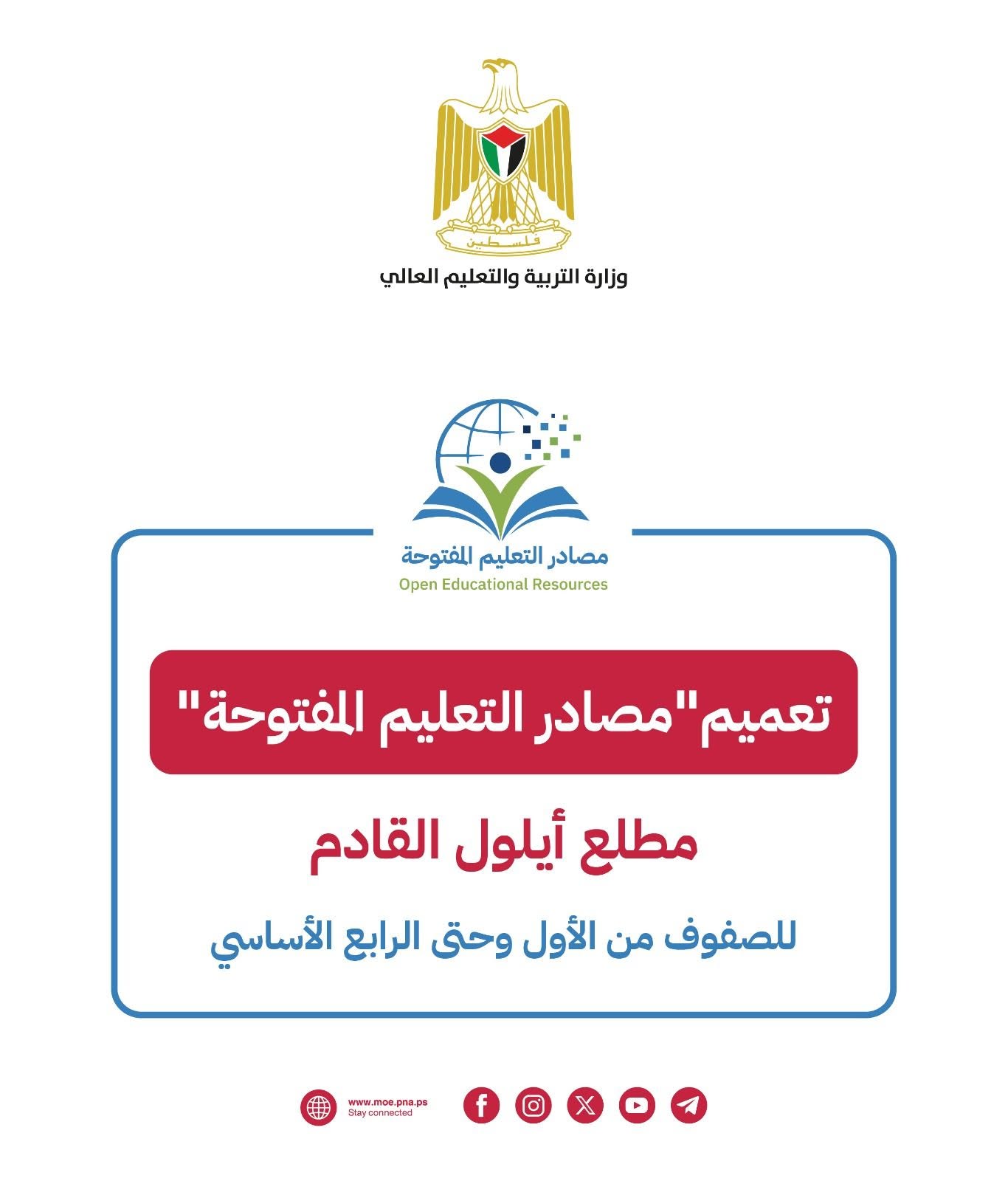
I would like also share the recent initiative from Palestine where OER is put into action for knowledge creation using national language. This week, the Palestinian Ministry of Education and Higher Education decided to adopt Open Educational Resources (OER) at all levels of school education in grades 1-4 throughout the country starting from the new academic year in September, based on the pilot run in 64 schools and research-based evaluation, consultations with all stakeholders, teacher training, and the provision of open digital resources and interactive learning tools.
The official announcement (in Arabic) can be found here:
Palestinian Ministry of Education and Higher Education announcement (Arabic
1 Like
This is an outstanding achievement especially to affect elementary age learners. I am eager to read more (with the aid of translation tools) about this initiative.
I strongly support the call for knowledge creation in languages beyond English. If OER is to truly democratize education, it must reflect the linguistic diversity of our communities. Translation, localization, and—most importantly—original content creation in multiple languages are essential steps toward equity.By embracing multilingualism, we empower learners and educators worldwide to contribute authentically, ensuring that open knowledge is not limited by language barriers.
Warm regards,
Wisal Alim
Sudan 